The Big Light Can Wait: A Five-Point Lighting Map for Rented Flats

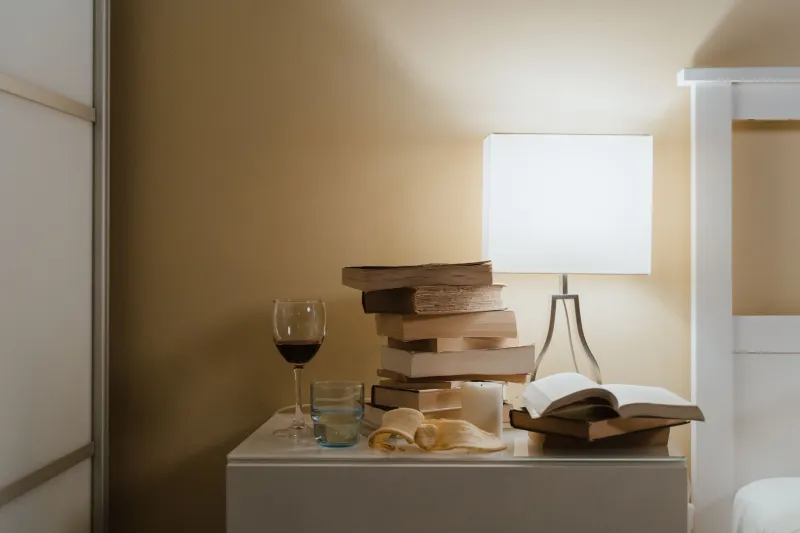
Photo: cosy small flat corner lamp warm light winter evening UK interior, via cdn.imgbin.com
At No. 67, the ceiling light is a last resort. Not because it is bad, but because it does one job: it fills the room. On a dark November afternoon, filling the room is rarely what you want. You want pockets of light that tell you where to put your cup, where to leave your book, where to pause between the front door and the kettle. That is the thinking behind my five-point lighting map: five small sources, placed by route rather than by room, so a rented flat feels layered without a single new cable in the wall.
Start with the route, not the room
Most lighting advice begins with a room and a ceiling. Rented flats rarely reward that. Start instead with the path you actually walk after four o’clock: door, hall, kitchen edge, sofa, bed. Mark the places you stop. Those are the points that need light. The map works whether you have one room or four, because it follows use rather than floor plans. It also keeps you honest. If a lamp is not on the route, it is probably decoration; if it is on the route, it is doing work.
Point one: the anchor corner
Choose the corner you see first when you come into the main room. Not the darkest corner, and not the one behind the door. The one that gives the room a centre of gravity. A slim floor lamp with a fabric shade is the renter’s friend here: no wall fixing, no electrician, and enough height to push light down onto a chair or up onto the wall. Keep the shade opaque enough to avoid glare at eye level. In a small flat, this lamp does the job of a second ceiling light, but more politely.
Point two: the chair shoulder
The second point is a table lamp within reach of wherever you sit. This is the reading light, the knitting light, the please-do-not-make-me-get-up light. Put it slightly behind and to the side of your shoulder rather than directly in front. That angle stops the bulb from printing itself onto the page. A small base matters more than a big shade in a tight room. If the table is tiny, look for a clamp lamp or a rechargeable cordless one that can move from sofa to desk without another plug.
Point three: the shelf glow
The third point is the one people forget: a low, soft light on a shelf or alcove. It does not need to be a lamp in the traditional sense. A small battery-operated puck light, a picture light, or a slim LED strip tucked under a shelf can lift the middle of a wall and make the room feel taller. The trick is to hide the source. You want the pool of light, not the plastic. Warm white, low output, and a switch you can reach without climbing.
Point four: the threshold
The fourth point lives where one space becomes another: hall to sitting room, sitting room to kitchen. This is not about floodlighting the hall. It is about a gentle change of light so you do not walk from a cosy room into a black corridor. A small plug-in night light with a warm bulb, a battery candle in a lantern, or a low lamp on a hallway console all work. In a rental, a plug-in option with a dusk sensor is the least fussy. It also makes late-night trips to the kitchen less dramatic.
Point five: the low pool
The fifth point is deliberately low: a small lamp near the floor, perhaps beside the sofa or at the end of the bath, if your flat has one. This is the light that makes a winter evening feel furnished rather than lit. A rechargeable lantern, a low stool with a tiny lamp, or a plug-in wall washer placed near the skirting will do. Keep it away from trailing cables and pets. The aim is a glow you notice at ankle height, not a second sun.
The bulb question
Bulb warmth matters more than wattage in a small flat. Look for warm white, around 2700K, and choose the lowest brightness that still lets you read. If a bulb is too cold, every corner looks like a surgery; if it is too bright, every corner looks like a shop window. Dimming helps, but you do not need smart bulbs everywhere. One dimmable lamp in the main room and plain warm bulbs elsewhere is often enough. And please check the fitting before you fall for a shade. E27 and E14 are the usual suspects in the UK, but small lamps can be fussy.
Cables, without a landlord email
The renter’s rule is simple: no new holes, no new sockets, no drama. Use adhesive cable clips on the skirting, fabric cable covers where a lead crosses a wall, and a slim extension lead with a switched plug for the corner lamp. Command-style hooks can hold a lightweight cable along a picture rail; just test the paint first. Keep leads off walking routes and away from radiators. If a cable must cross a doorway, a rubber cable protector is cheaper than a fall and easier than an apology to your landlord.
A simple map for a dark afternoon
Door: threshold light, warm and low. Hall: one small plug-in light at ankle or console height. Main room: anchor corner lamp, chair-shoulder table lamp, shelf glow. Kitchen edge: a low lamp or under-cabinet strip if you have a spare socket. Bedroom: one bedside lamp and one rechargeable lantern for the floor. That is five working points plus a spare, which is plenty. Turn them on in sequence as the afternoon goes blue: first the shelf, then the corner, then the shoulder lamp. The ceiling light can wait. In a small flat, that is not a compromise. It is the whole point.